

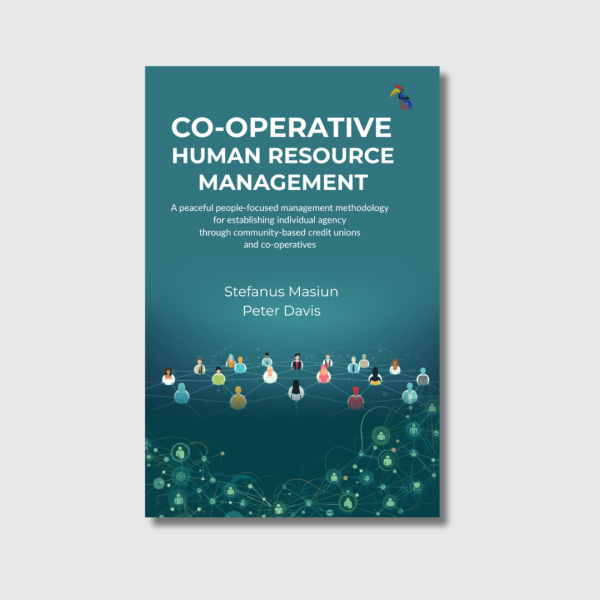
This book presents a people-centred approach to human resource management grounded in the development of community-based co-operatives and credit unions. Inspired by the principles of Catholic Social Doctrine—human dignity, the common good, subsidiarity, and solidarity—it proposes co-operatives as institutions that empower individuals while strengthening the social fabric of communities. The economic dimension is understood not as an end in itself, but as a means to foster social, cultural, and economic freedom through unity, fraternity, and equality of opportunity.
The book responds to the cumulative global crises of climate change, environmental destruction, poverty, social conflict, and widening inequality. It highlights the limitations of dominant political and economic systems driven by unsustainable growth, technological consumerism, and the disconnection between humanity and the natural world. In contrast, it argues that community-based co-operatives offer a practical and peaceful alternative capable of restoring balance between human needs, social justice, and ecological sustainability.
Central to the book is the conviction that resilient local communities—particularly in the Global South—hold the potential to lead the transition toward a more sustainable and humane economic order. Through self-help initiatives, local ownership, and democratic participation, co-operatives and credit unions can strengthen individual agency, protect cultural and ecological integrity, and improve quality of life without reliance on exploitative economic structures.
The book also presents co-operatives as instruments of peaceful social transformation. By fostering participation, ethical responsibility, and solidarity, co-operatives contribute to the formation of active citizens and morally grounded communities. This bottom-up model offers a viable pathway for building a just, inclusive, and sustainable society, where economic life is rooted in human relationships, community resilience, and harmony with nature.
Ultimately, this work is both a theoretical reflection and a practical call to action. It invites faith communities, civil society, and grassroots organizations to renew their commitment to co-operative development as a peaceful and effective means of restoring human dignity, strengthening communities, and securing a sustainable future for people and the planet.





Reviews
There are no reviews yet.